Bullet Points Over Baghdad
By PAUL KRUGMAN
The overthrow of Saddam Hussein was supposed to provide the world with a demonstration of American power. It didn't work out that way. But the Bush administration has come up with the next best thing: a demonstration of American PowerPoint. Bullets haven't subdued the insurgents in Iraq, but the administration hopes that bullet points will subdue the critics at home.
The National Security Council document released this week under the grandiose title "National Strategy for Victory in Iraq" is neither an analytical report nor a policy statement. It's simply the same old talking points - "victory in Iraq is a vital U.S. interest"; "failure is not an option" - repackaged in the style of a slide presentation for a business meeting.
It's an embarrassing piece of work. Yet it's also an important test for the news media. The Bush administration has lost none of its confidence that it can get away with fuzzy math and fuzzy facts - that it won't be called to account for obvious efforts to mislead the public. It's up to journalists to prove that confidence wrong.
Here's an example of how the White House attempts to mislead: the new document assures us that Iraq's economy is doing really well. "Oil production increased from an average of 1.58 million barrels per day in 2003, to an average of 2.25 million barrels per day in 2004." The document goes on to concede a "slight decrease" in production since then.
We're not expected to realize that the daily average for 2003 includes the months just before, during and just after the invasion of Iraq, when its oil industry was basically shut down. As a result, we're not supposed to understand that the real story of Iraq's oil industry is one of unexpected failure: instead of achieving the surge predicted by some of the war's advocates, Iraqi production has rarely matched its prewar level, and has been on a downward trend for the past year.
What about the security situation? During much of 2004, the document tells us: "Fallujah, Najaf, and Samara were under enemy control. Today, these cities are under Iraqi government control."
Najaf was never controlled by the "enemy," if that means the people we're currently fighting. It was briefly controlled by Moktada al-Sadr's Mahdi Army. The United States once vowed to destroy that militia, but these days it's as strong as ever. And according to The New York Times, Mr. Sadr has now become a "kingmaker in Iraqi politics." So what sort of victory did we win, exactly, in Najaf?
Moreover, in what sense is Najaf now under government control? According to The Christian Science Monitor, "Sadr supporters and many Najaf residents say an armed Badr Brigade" - the militia of a Shiite group that opposes Mr. Sadr and his supporters - "still exists as the Najaf police force."
Meanwhile, this is the third time that coalition forces have driven the insurgents out of Samara. On the two previous occasions, the insurgents came back after the Americans left. And there, too, it's stretching things to say that the city is under Iraqi government control: according to The Associated Press, only 100 of the city's 700 policemen show up for work on most days.
There's a lot more like that in the document. Refuting some of the upbeat assertions about Iraq requires specialized knowledge, but many of them can be quickly debunked by anyone with an Internet connection.
The point isn't just that the administration is trying, yet again, to deceive the public. It's the fact that this attempt at deception shows such contempt - contempt for the public, and especially contempt for the news media. And why not? The truth is that the level of misrepresentation in this new document is no worse than that in a typical speech by President Bush or Vice President Dick Cheney. Yet for much of the past five years, many major news organizations failed to provide the public with effective fact-checking.
So Mr. Bush's new public relations offensive on Iraq is a test. Are the news media still too cowed, too addicted to articles that contain little more than dueling quotes to tell the public when the administration is saying things that aren't true? Or has the worm finally turned?
There have been encouraging signs, notably a thorough front-page fact-checking article - which even included charts showing the stagnation of oil production and electricity generation! - in USA Today. But the next few days will tell.
Friday, December 02, 2005


Thursday, December 01, 2005
Remembering Oscar Romero
The first of two Pope John Paul II movies aired last night, the next will air soon.
Amid what will continue to be the popularization of the recently deceased pope, I'll invite you to remember and reverance another name, a Roman Catholic who was much more of a hero than JPII.
His name was Oscar Romero. You can read more about him here.
The short version is, Romero labored as Archbishop in El Salvador during the John Negroponte days of death squads, disappearings, and military juntas. He was first thought of as a conservative, meaning he would obediently support the established order. But after observing the human rights violations of the U.S.-backed El Salvadorian regime, he began to take more of an assertive role in challenging the abuses and inequities of the Latin American country's government. He was gunned down for his troubles in 1980--IN A CHURCH, WHILE PERFORMING MASS no less--by militants affiliated with the dictatorial government.
His story is moving not only for the troubling intersection of human rights abuses and U.S. support for a corrupt, murderous regime, but also because the then new Pope, John Paul II, "scolded" Romero for allegedly advocating "liberation theology", conservative theology-speak for helping the poor and challenging inequitable corporatist government policies, particularly those involving land distribution.
So, when the poor Catholics of Latin America most needed him, the former Pope criticized their bishop and passively or directly, aligned himself with the most abusive of the region's regimes.
Fortunately, Romero's assassination helped draw attention to the abuses going on in El Salvador, served to highlight the U.S. role in that country, and Romero has been treated more favorably after his death by the Catholic hierarchy that spurned him while he was alive. But as we're invited to consider the life of JPII, remember instead, Oscar Romero, and how the Pope treated him and his people, and who the Pope aligned himself with. While JPII's backing of Solidarity in Poland is admirable, turning his back on Latin America was inexcusable.
Amid what will continue to be the popularization of the recently deceased pope, I'll invite you to remember and reverance another name, a Roman Catholic who was much more of a hero than JPII.
His name was Oscar Romero. You can read more about him here.
The short version is, Romero labored as Archbishop in El Salvador during the John Negroponte days of death squads, disappearings, and military juntas. He was first thought of as a conservative, meaning he would obediently support the established order. But after observing the human rights violations of the U.S.-backed El Salvadorian regime, he began to take more of an assertive role in challenging the abuses and inequities of the Latin American country's government. He was gunned down for his troubles in 1980--IN A CHURCH, WHILE PERFORMING MASS no less--by militants affiliated with the dictatorial government.
His story is moving not only for the troubling intersection of human rights abuses and U.S. support for a corrupt, murderous regime, but also because the then new Pope, John Paul II, "scolded" Romero for allegedly advocating "liberation theology", conservative theology-speak for helping the poor and challenging inequitable corporatist government policies, particularly those involving land distribution.
So, when the poor Catholics of Latin America most needed him, the former Pope criticized their bishop and passively or directly, aligned himself with the most abusive of the region's regimes.
Fortunately, Romero's assassination helped draw attention to the abuses going on in El Salvador, served to highlight the U.S. role in that country, and Romero has been treated more favorably after his death by the Catholic hierarchy that spurned him while he was alive. But as we're invited to consider the life of JPII, remember instead, Oscar Romero, and how the Pope treated him and his people, and who the Pope aligned himself with. While JPII's backing of Solidarity in Poland is admirable, turning his back on Latin America was inexcusable.
Wednesday, November 30, 2005
Yeah, OK, Whatever
Meet the new "strategery". Just like the old "strategery".
Thanks to Atrios for the link and the Washington Note for the doc.
Thanks to Atrios for the link and the Washington Note for the doc.
Tuesday, November 29, 2005
Blame Fox
With the president's tanking poll numbers, and the indictments, plea bargains and resignations of white house officials and congressperson's of the Republican variety spoiling the conservative's parade, the wing-nuts are left with only the public's falling support for the Iraq war and the need to blame the MSM for the public's change of mood to harp on. Ezra Klein and James Wolcott have picked up some of these whinings, but the question I have is, how can the MSM be at fault for the public's increasingly negative view of the war when, as conservatives have been so fondly telling us for the past several years, Roger Ailes' Fox "News" is kicking CNN's and MSNBC's asses in the ratings? And the NYTimes? C'mon. Only political geeks like me get or read the NYT.
You mean to tell me that with all the water-carrying the Fox "News" crews have been doing for the Bush Administration, that someone else is still responsible for the hostility of public opinion and the legal shenanigans Republicans have been finding themselves in? How can CNN and MSNBC (and the NYT) be duping the public and hurting our troops' "morale" if ain't nobody watching them stations or reading print anymore?
So I blame Fox "News". By so shamelessly parroting the administration's rhetoric, policies and attacks on its opposition, the most watched cable TV "news" network has been hurting our troops and hurting America. They've enabled the nation's enemies in Iraq to mount an insurgency against our very rightful rule of that country. They've aided and abetted the evil-doers in Iraq who want our troops to go back where then came from. So next time, when you hear tales of flagging troop morale, the triumph of those pinko liberal anti-American hippies in making over half the country not trust our president, and another Republican party official indicted, do what I do, blame Fox "News". You'll feel better. I promise.
You mean to tell me that with all the water-carrying the Fox "News" crews have been doing for the Bush Administration, that someone else is still responsible for the hostility of public opinion and the legal shenanigans Republicans have been finding themselves in? How can CNN and MSNBC (and the NYT) be duping the public and hurting our troops' "morale" if ain't nobody watching them stations or reading print anymore?
So I blame Fox "News". By so shamelessly parroting the administration's rhetoric, policies and attacks on its opposition, the most watched cable TV "news" network has been hurting our troops and hurting America. They've enabled the nation's enemies in Iraq to mount an insurgency against our very rightful rule of that country. They've aided and abetted the evil-doers in Iraq who want our troops to go back where then came from. So next time, when you hear tales of flagging troop morale, the triumph of those pinko liberal anti-American hippies in making over half the country not trust our president, and another Republican party official indicted, do what I do, blame Fox "News". You'll feel better. I promise.
Monday, November 28, 2005
Another One Bites The Dust

Duke was the most obnoxious member of a very obnoxious party, which should tell you something. And he had his hand in the cookie jar, too. What about that.
Good riddance.
5-128, 4-59
Chargers 23
Skins 17
A little math. Add 5-128 to 4-59 and you get 23-17. How? The Chargers received 5 Redskin kickoffs and returned them for 128 friggin yards. The Skins received 4 Chargers kickoffs and returned then a stinking 59 yards. When you stink up the joint on special teams, like the Skins did yesterday, this is what happens. When you allow the other team 128 yards on kickoff returns, especially a good offensive team like the Chargers, they're going to score. And when you only get 59 yards on kickoff returns you're going to forced to make long drives, which for a feeble offensive team like the Skins, means you're going to have trouble scoring. And when you add the 3 yards of punt returns the Skins got yesterday, you get two long LT TD runs and a
23-17 overtime loss.
Rams 33
Texans 27
Somebody named Ryan Fitzpatrick threw for 310 yards and 3 TD's for the Rams. The Texans are 1-10. And the Rams are next for the Redskins.
Da Bears 13
Tampa 10
Da Bears are 8-3!! And they have a rookie QB. How did this happen?
Brownies 12
Vikings 24
Brad Johnson has helped Minnesota come back from the dead.
Broncos 27
Cowboys 21
I know they lost, but can you imagine what the Cowboys and Bill Parcells would be doing this year without Drew Bledsoe? Over the last couple of years, here have been the Cowboys QB's--41 year old Vinnie, Drew Henson, Chad Hutchinson, Tony Romo, and Quincy Carter. Cowboy fans, say your lucky prayers. Nice comeback for Ron Dayne with the big run in OT.
Atlanta 27
Lions 7
How much of this game was played on the Detroit side of the field? What's happened in Motown? Do the Redskins play there when they aren't at FedEx? They have all those wideouts and can't get them the ball. Bad O-line, QB's can't get the thing down the field. Rumors Mooch was going to get sacked on Friday, which doesn't make any sense at this time of the year and given Dick Jauron is waiting in the wings.
Saints 21
Jets 19
More interesting game than the teams' records would have predicted. Brooks Bollinger is coming along, and I wonder if the Jets can start thinking about whether he can be a serious alternative at QB if Chad Pennington can't come back.
Pats 16
KC 26
Glad to see the Pats getting their comeuppance. Even if injuries have been largely responsible. But they're still likely to win their division and thus get a playoff bye, so don't count them out yet. Seriously.
College special
Nebraska 30
Colorado 3
A Huskers fan from NJ (don't ask) I was getting ready to launch firebillcallahan.com but then they go into Boulder and totally blow up the Buffs, who because Iowa State lost Saturday in Lawrence, will still be going to the Big 12 title game next week against Texas (yeah, good luck). That Zack Taylor is some QB. Is he a senior?
Skins 17
A little math. Add 5-128 to 4-59 and you get 23-17. How? The Chargers received 5 Redskin kickoffs and returned them for 128 friggin yards. The Skins received 4 Chargers kickoffs and returned then a stinking 59 yards. When you stink up the joint on special teams, like the Skins did yesterday, this is what happens. When you allow the other team 128 yards on kickoff returns, especially a good offensive team like the Chargers, they're going to score. And when you only get 59 yards on kickoff returns you're going to forced to make long drives, which for a feeble offensive team like the Skins, means you're going to have trouble scoring. And when you add the 3 yards of punt returns the Skins got yesterday, you get two long LT TD runs and a
23-17 overtime loss.
Rams 33
Texans 27
Somebody named Ryan Fitzpatrick threw for 310 yards and 3 TD's for the Rams. The Texans are 1-10. And the Rams are next for the Redskins.
Da Bears 13
Tampa 10
Da Bears are 8-3!! And they have a rookie QB. How did this happen?
Brownies 12
Vikings 24
Brad Johnson has helped Minnesota come back from the dead.
Broncos 27
Cowboys 21
I know they lost, but can you imagine what the Cowboys and Bill Parcells would be doing this year without Drew Bledsoe? Over the last couple of years, here have been the Cowboys QB's--41 year old Vinnie, Drew Henson, Chad Hutchinson, Tony Romo, and Quincy Carter. Cowboy fans, say your lucky prayers. Nice comeback for Ron Dayne with the big run in OT.
Atlanta 27
Lions 7
How much of this game was played on the Detroit side of the field? What's happened in Motown? Do the Redskins play there when they aren't at FedEx? They have all those wideouts and can't get them the ball. Bad O-line, QB's can't get the thing down the field. Rumors Mooch was going to get sacked on Friday, which doesn't make any sense at this time of the year and given Dick Jauron is waiting in the wings.
Saints 21
Jets 19
More interesting game than the teams' records would have predicted. Brooks Bollinger is coming along, and I wonder if the Jets can start thinking about whether he can be a serious alternative at QB if Chad Pennington can't come back.
Pats 16
KC 26
Glad to see the Pats getting their comeuppance. Even if injuries have been largely responsible. But they're still likely to win their division and thus get a playoff bye, so don't count them out yet. Seriously.
College special
Nebraska 30
Colorado 3
A Huskers fan from NJ (don't ask) I was getting ready to launch firebillcallahan.com but then they go into Boulder and totally blow up the Buffs, who because Iowa State lost Saturday in Lawrence, will still be going to the Big 12 title game next week against Texas (yeah, good luck). That Zack Taylor is some QB. Is he a senior?
Walk The Line

I went to this movie yesterday. I was experiencing movie-popcorn-hot-dog-withdrawal symptoms, didn't particularly care to watch the Skins game (more about this below), and didn't know what else to plop my seven dollars down for. I didn't know much about Cash, although I did like a couple of songs of his that had been featured in One Night at McCool's (Wanted Man) and Dawn of the Dead (When The Man Comes Around). I have one of his most recent albums,w which has some other good songs on it. So I thought, why not. But I wasn't expecting much.
But it was great. Really great. It was a little longer than I expected. But thoroughly entertaining. And the soundtrack just kills. Joaquin Phoenix can really belt out the Johnny Cash tunes. Unfortunately, the CD doesn't have the live recordings in the movie. Nonetheless, a really great movie and story. Afterwards I went to two stores looking for the CD, and I picked up two other Johnny Cash albums. I imagine the movie will have a similar effect on other movie-goers, so the Johnny Cash albums are probably going to be flying out of the stores for awhile.
Wednesday, November 23, 2005
The Best and Worst to be Thankful for (or not)
Amanda and a few others have been kicking this around the blogosphere, so why not?
Most disappointing movies (not sure I can really say "hated" since most movies I see are ones I have applied at least some selective quality towards, being sure to avoid the ones I'm absolutely sure I wouldn't make it through or would hate myself for doing so afterward):
1) Cold Mountain - a very picturesque movie, but just didn't have any jazz. The characters weren't interesting. The story ends sadly.
2) Constantine - a mess, unrealistic effects, a movie that couldn't quite make up its mind whether to be serious or not.
3) The Constant Gardner - a great cast, but didn't live up to expectations. Rachel Weisz's character dies in it.
4) Donnie Darko - ??
5) Leaving Las Vegas - Terribly depressing
6) My Best Friend's Wedding - The beginning of my I Don't Like Julia Roberts stage; just an annoying plot line and disturbing character interaction
7) 15 Minutes - another movie not sure whether it wanted to be serious or not. It wasn't.
8) 3000 Miles to Graceland - couldn't get past the first few minutes.
9) The Clearing - the ending just drops off to nowhere.
Under-rated or over-looked movies:
1. The Brady Bunch Movie - a most humerous takeoff of the old sitcom.
2. Cop Land - Stallone, DeNiro. Bad cop--no donut.
3. Summer School - Mark Harmon, a young Courtney Thorne Smith, in humorous story of slacker gym teacher turned english summer tutor and his equally unambitious students
4. Weekend at Bernies (surprised to see this on the bottom ranked 80's movies)
5. Darkness - suspenseful. And it has Anna Paquin in it.
6. The Village - but like most of his movies, can really only watch it once.
7. Death to Smoochie - Robin Williams and Edward Norton in dark comedy about two children's performers
8. Cheaters - Jena Malone, Jeff Daniels, story of high school honor class that cheats to win state-wide academic competition (based on true story).
9. Trapped - Charlieze Theron, Kevin Bacon; couple has child kidnapped, but they turn the tables on the kidnappers.
10. In the Cut - interesting and erotic movie with Meg Ryan playing against type.
Most disappointing movies (not sure I can really say "hated" since most movies I see are ones I have applied at least some selective quality towards, being sure to avoid the ones I'm absolutely sure I wouldn't make it through or would hate myself for doing so afterward):
1) Cold Mountain - a very picturesque movie, but just didn't have any jazz. The characters weren't interesting. The story ends sadly.
2) Constantine - a mess, unrealistic effects, a movie that couldn't quite make up its mind whether to be serious or not.
3) The Constant Gardner - a great cast, but didn't live up to expectations. Rachel Weisz's character dies in it.
4) Donnie Darko - ??
5) Leaving Las Vegas - Terribly depressing
6) My Best Friend's Wedding - The beginning of my I Don't Like Julia Roberts stage; just an annoying plot line and disturbing character interaction
7) 15 Minutes - another movie not sure whether it wanted to be serious or not. It wasn't.
8) 3000 Miles to Graceland - couldn't get past the first few minutes.
9) The Clearing - the ending just drops off to nowhere.
Under-rated or over-looked movies:
1. The Brady Bunch Movie - a most humerous takeoff of the old sitcom.
2. Cop Land - Stallone, DeNiro. Bad cop--no donut.
3. Summer School - Mark Harmon, a young Courtney Thorne Smith, in humorous story of slacker gym teacher turned english summer tutor and his equally unambitious students
4. Weekend at Bernies (surprised to see this on the bottom ranked 80's movies)
5. Darkness - suspenseful. And it has Anna Paquin in it.
6. The Village - but like most of his movies, can really only watch it once.
7. Death to Smoochie - Robin Williams and Edward Norton in dark comedy about two children's performers
8. Cheaters - Jena Malone, Jeff Daniels, story of high school honor class that cheats to win state-wide academic competition (based on true story).
9. Trapped - Charlieze Theron, Kevin Bacon; couple has child kidnapped, but they turn the tables on the kidnappers.
10. In the Cut - interesting and erotic movie with Meg Ryan playing against type.
Used Books
I'm still waiting for my used copy of The Satanic Verses to come in the mail from the Amazon-affiliated book-dealer. Seems like I ordered it weeks ago. That's the thing with getting stuff through the mail. Like with Amazon, your order could come the next day, or you might wait three weeks. And I couldn't find a copy at my neighborhood Borders. Figures. I'll only have time to skim it by the time of my bookclub meeting. And it's a complex book, I hear, to say the least. There's a primer for it that was sent to me by one of my bookclub mates.
Meanwhile, I've picked up reading James O' Donnell's Augustine again. As at least one of it's reviewers noted, this Augustine is not an easy read, at least in terms of how the book is organized. The prose is fine, but if you're looking for a nice chronological story-telling, and an outline of all the characters and issues, this book isn't it. Probably better to read the Peter Brown version. Nonetheless, there are things to like in O'Donnell's version.
Like a lot of recent church scholarship, O'Donnell reveals a more nuanced Augustine and a more complex church portrait than what church apologists have painted. O'Donnell's Augustine maintains the career climbing, publicity seeking that marked his younger, uncoverted days. Only in his ecclesiastical career, his ambition takes the form of church authority and that era's form of self-promotion--letter writing, between the Bishop and the notables of the day, preferably the political and influential, rather than his fellow clergy.
Of the theological and political divide between Augustine's Caecilianists and the opposition Donatists, the latter of whom Augustine was himself once affiliated, and which before Augustine's time was the dominant sect, O' Donnell doesn't draw a nice, neat distinction for the reader, most likely because the distinctions are not easy to grasp for us moderns.
In fact, the strength of O'Donnell's tale is it's illumination of a less unified, theologically sorted out Christian religion than that proposed by both the orthodox Catholics and fundamentalist Protestants today. But for each, Augustine's more global, authoritarian views had a great deal in shaping their tradition's world views.
Meanwhile, I've picked up reading James O' Donnell's Augustine again. As at least one of it's reviewers noted, this Augustine is not an easy read, at least in terms of how the book is organized. The prose is fine, but if you're looking for a nice chronological story-telling, and an outline of all the characters and issues, this book isn't it. Probably better to read the Peter Brown version. Nonetheless, there are things to like in O'Donnell's version.
Like a lot of recent church scholarship, O'Donnell reveals a more nuanced Augustine and a more complex church portrait than what church apologists have painted. O'Donnell's Augustine maintains the career climbing, publicity seeking that marked his younger, uncoverted days. Only in his ecclesiastical career, his ambition takes the form of church authority and that era's form of self-promotion--letter writing, between the Bishop and the notables of the day, preferably the political and influential, rather than his fellow clergy.
Of the theological and political divide between Augustine's Caecilianists and the opposition Donatists, the latter of whom Augustine was himself once affiliated, and which before Augustine's time was the dominant sect, O' Donnell doesn't draw a nice, neat distinction for the reader, most likely because the distinctions are not easy to grasp for us moderns.
In fact, the strength of O'Donnell's tale is it's illumination of a less unified, theologically sorted out Christian religion than that proposed by both the orthodox Catholics and fundamentalist Protestants today. But for each, Augustine's more global, authoritarian views had a great deal in shaping their tradition's world views.
Tuesday, November 22, 2005
Dude, Where's My Ideology?
I've been trying to be pragmatic about the 2008 Dem field for president. Just win, baby.
But I can't help feeling concerned when I read stuff like this in yesterday's Wash Post Style article on Mark Warner:
"It behooves Democrats, he says, to reframe the debate liberal vs. conservative to 'future vs. past.' "
We've heard this before:
"This election is not about ideology, it's about competence."
Of course, after Iraq and Katrina, I'd welcome some good old fashioned competence for a change. And I think we can reasonably conclude that there's a connection between an anti-government ideology and the actual performance of government. And maybe Warner's right: reframing the debate from "liberal" to "future" is a good way to avoid a negative label while simultaneously recasting the conservative's backward agenda in a way that would make Democrats seem appealing by comparison.
But I hope this doesn't turn into a wholesale refutation of ideology, particularly among the progressive grassroots. Starting at least with the Dukakis campaign, Democrats began a withdrawal of their own from the ideological field of combat with Republicans and not surprisingly, we've been getting our hats handed to us ever since, defensive about our beliefs, and unable to shape the public debate and policymaking process.
Ezra Klein's concerned too:
For my part, I have an article on the Brown/Hackett race (and what it says about the netroots) in the most recent American Prospect. My argument is, basically, that the netroots need to start thinking about who they are ideologically rather than simply flocking to who they prefer pugilistically.
While Democrats should be optimistic about their prospects in 2006 and 2008, it may be tempting to do and say whatever we think it takes to win, without regard for laying out a cohesive narrative about what Democrats value (and the risks inherent in defining ourselves). But since the Republicans will define us anyway, better to do on our own terms.
But I can't help feeling concerned when I read stuff like this in yesterday's Wash Post Style article on Mark Warner:
"It behooves Democrats, he says, to reframe the debate liberal vs. conservative to 'future vs. past.' "
We've heard this before:
"This election is not about ideology, it's about competence."
Of course, after Iraq and Katrina, I'd welcome some good old fashioned competence for a change. And I think we can reasonably conclude that there's a connection between an anti-government ideology and the actual performance of government. And maybe Warner's right: reframing the debate from "liberal" to "future" is a good way to avoid a negative label while simultaneously recasting the conservative's backward agenda in a way that would make Democrats seem appealing by comparison.
But I hope this doesn't turn into a wholesale refutation of ideology, particularly among the progressive grassroots. Starting at least with the Dukakis campaign, Democrats began a withdrawal of their own from the ideological field of combat with Republicans and not surprisingly, we've been getting our hats handed to us ever since, defensive about our beliefs, and unable to shape the public debate and policymaking process.
Ezra Klein's concerned too:
For my part, I have an article on the Brown/Hackett race (and what it says about the netroots) in the most recent American Prospect. My argument is, basically, that the netroots need to start thinking about who they are ideologically rather than simply flocking to who they prefer pugilistically.
While Democrats should be optimistic about their prospects in 2006 and 2008, it may be tempting to do and say whatever we think it takes to win, without regard for laying out a cohesive narrative about what Democrats value (and the risks inherent in defining ourselves). But since the Republicans will define us anyway, better to do on our own terms.
Monday, November 21, 2005
Monday Morning QB
Norv Turner 16
The Danny 13
Everytime Kerry Collins dropped back to pass--and the nearest Washington defensive lineman appeared to be in Fairfax County--I cringed, imagining Randy Moss catching a bomb and scoring. Well, it turned out that Jerry Porter caught the bombs away pass that started the Raiders turn around yesterday. This game exposed just about everything that's been wrong with the Skins this year. Aside from the blitz, a non-existent pass rush, an inconsistent offense, turnovers, and poor pass protection. This was a crucial game for Washington. I've said previously that I thought Washington had a favorable remaining schedule, but not now. They needed to win--at home--yesterday and didn't get it done. Their season's over.
Seahawks 27
49'ers 25
Can someone explain to me why this game was listed as one of the TV games in the Balt-Wash DC area yesterday? Fortunately we got Indy-Cincy on the other station, but c'mon. And how was it that with Ken Dorsey at QB, the Seahawks didn't cover the spread?
Steelers 13
Ravens 16
Pittsburgh didn't have the one guy on their team that can pass-Rothlesburger--on the field yesterday, so you think they'd run the ball all afternoon. But everytime I tuned into this game when Pitt had the ball, I saw XFLer Tommy Maddux trying to pass. Strange game. Were Duce and the Bus hurt? Good game for the Colts as Pitt drops three games behind them for home field. Denver is two back.
Speaking of which,
Jets 0
Broncos 27
Ouch. Herm Edwards is too good a coach to have this kind of season. But their QB position is desperate. Wonder who they'll have next year? At 2-8, they may still be in the Matt Leinert sweepstakes.
Bills 3
Chargers 40
And SD is coming into town next week. Will Marty be the second ex-Skins coach to beat his former team? Skins go for two in a row next week.
Tampa 30
Falcons 27
Falcons have lost two straight and have fallen out of first in the NFC South. Tampa and Carolina on top. Guess the Bucs got healthy against the Redskins last week. Raiders will probably go on to win six straight.
Colts 45
Bengals 37
Very tedious end to this game, with Cincy trying to line up for an onsides kick at the end. The officials spent a basketball game final minute trying to sort things out. And, oh yeah, Colts 10-0.
Dolphins 0
Browns 22
What happened here?
The Danny 13
Everytime Kerry Collins dropped back to pass--and the nearest Washington defensive lineman appeared to be in Fairfax County--I cringed, imagining Randy Moss catching a bomb and scoring. Well, it turned out that Jerry Porter caught the bombs away pass that started the Raiders turn around yesterday. This game exposed just about everything that's been wrong with the Skins this year. Aside from the blitz, a non-existent pass rush, an inconsistent offense, turnovers, and poor pass protection. This was a crucial game for Washington. I've said previously that I thought Washington had a favorable remaining schedule, but not now. They needed to win--at home--yesterday and didn't get it done. Their season's over.
Seahawks 27
49'ers 25
Can someone explain to me why this game was listed as one of the TV games in the Balt-Wash DC area yesterday? Fortunately we got Indy-Cincy on the other station, but c'mon. And how was it that with Ken Dorsey at QB, the Seahawks didn't cover the spread?
Steelers 13
Ravens 16
Pittsburgh didn't have the one guy on their team that can pass-Rothlesburger--on the field yesterday, so you think they'd run the ball all afternoon. But everytime I tuned into this game when Pitt had the ball, I saw XFLer Tommy Maddux trying to pass. Strange game. Were Duce and the Bus hurt? Good game for the Colts as Pitt drops three games behind them for home field. Denver is two back.
Speaking of which,
Jets 0
Broncos 27
Ouch. Herm Edwards is too good a coach to have this kind of season. But their QB position is desperate. Wonder who they'll have next year? At 2-8, they may still be in the Matt Leinert sweepstakes.
Bills 3
Chargers 40
And SD is coming into town next week. Will Marty be the second ex-Skins coach to beat his former team? Skins go for two in a row next week.
Tampa 30
Falcons 27
Falcons have lost two straight and have fallen out of first in the NFC South. Tampa and Carolina on top. Guess the Bucs got healthy against the Redskins last week. Raiders will probably go on to win six straight.
Colts 45
Bengals 37
Very tedious end to this game, with Cincy trying to line up for an onsides kick at the end. The officials spent a basketball game final minute trying to sort things out. And, oh yeah, Colts 10-0.
Dolphins 0
Browns 22
What happened here?
Sunday, November 20, 2005
NYT Special Edition
Here's Frank Rich:
One hideous consequence of the White House's Big Lie - fusing the war of choice in Iraq with the war of necessity that began on 9/11 - is that the public, having rejected one, automatically rejects the other. That's already happening. The percentage of Americans who now regard fighting terrorism as a top national priority is either in the single or low double digits in every poll. Thus the tragic bottom line of the Bush catastrophe: the administration has at once increased the ranks of jihadists by turning Iraq into a new training ground and recruitment magnet while at the same time exhausting America's will and resources to confront that expanded threat.
But if anything, Brooks is even more interesting:
For while the American presence is a catalyst for violence in Iraq, it is not the main catalyst. The main source of violence in Iraq is the sectarian war between the Sunnis and the Shiites.
And, um, gee, why would that be?
In the vacuum of security caused by the botched American occupation, these ethnic tensions have turned into a low-grade civil war.
And, um, maybe the invasion has had something to do with the civil war breaking out, too.
And what about the administration coming clean on what it knows about Iraq, rather than pummeling us with "stay the course" propaganda?
There's one area, though, where I completely sympathize with Jack Murtha. I sympathize with his frustration. On Feb. 23, 1942, Franklin Roosevelt asked Americans to spread out maps before them and he described, step by step, what was going on in World War II, where the U.S. was winning and where it was losing. Why can't today's president do that? Why can't he show that he is aware that his biggest problem is not in Iraq, it's on the home front?
Since the president doesn't give out credible information, it's no wonder Republicans are measuring success by how quickly we can get out;
One hideous consequence of the White House's Big Lie - fusing the war of choice in Iraq with the war of necessity that began on 9/11 - is that the public, having rejected one, automatically rejects the other. That's already happening. The percentage of Americans who now regard fighting terrorism as a top national priority is either in the single or low double digits in every poll. Thus the tragic bottom line of the Bush catastrophe: the administration has at once increased the ranks of jihadists by turning Iraq into a new training ground and recruitment magnet while at the same time exhausting America's will and resources to confront that expanded threat.
But if anything, Brooks is even more interesting:
For while the American presence is a catalyst for violence in Iraq, it is not the main catalyst. The main source of violence in Iraq is the sectarian war between the Sunnis and the Shiites.
And, um, gee, why would that be?
In the vacuum of security caused by the botched American occupation, these ethnic tensions have turned into a low-grade civil war.
And, um, maybe the invasion has had something to do with the civil war breaking out, too.
And what about the administration coming clean on what it knows about Iraq, rather than pummeling us with "stay the course" propaganda?
There's one area, though, where I completely sympathize with Jack Murtha. I sympathize with his frustration. On Feb. 23, 1942, Franklin Roosevelt asked Americans to spread out maps before them and he described, step by step, what was going on in World War II, where the U.S. was winning and where it was losing. Why can't today's president do that? Why can't he show that he is aware that his biggest problem is not in Iraq, it's on the home front?
Since the president doesn't give out credible information, it's no wonder Republicans are measuring success by how quickly we can get out;
Friday, November 18, 2005
Murtha, the War, and Getting Out
Before Thursday I had started to think some very counterintuitive thoughts for a progressive blogger type.
For instance, after initially rallying behind Harry Reid's Senate shut-down and call for phase II of the Senate Intelligence Committee's investigation on the use of pre-war intelligence, I'd started to wonder if that was really a good avenue for Democrats to go down. After all, what would such an investigation uncover that wasn't already known? Would the evidence of such an investigation amount to anything more than ambigous conclusions? And perhaps most importantly, would it do anything to improve the course of the conflict and situation in Iraq? Harry Truman's WWII committee on contracts, cost over-runs, and shoddy workmanship in the war effort had just this potential. But I wasn't sure raising anew questions about the intelligence and the use of the intelligence, among other pre-war decisions, was going to amount to much. And politically, was there a danger that such a strategy could in the end prove to be a case of Democratic over-reach, convincing many swing-voters Democrats were just out for blood rather than interested in a constructive solution to the war in Iraq and "war on terrorism" more broadly?
That the Reid Senate maneuver, among other things perhaps, seemed to have energized the White House and encouraged the administration's worst "dissent is unpatriotic" line of attack added to those concerns.
What's more, most Democrats had not really appeared to be offering an alternative course of action in Iraq as I could tell. What could Democrats say to the country about Iraq and what to do there?
The discussion of timetables, or the more radical idea of withdrawal, also hadn't convinced me on either policy or political grounds as being necessarily fruitfull. The "we broke it, we fix it" argument about the invasion and reconstruction of Iraq however over simplified, had a certain merit I couldn't ignore. And most of the Democratic apologies for their Iraq war votes struck me as being too little, too late, lacking a recognition of the propaganda effect that led to the war's approval by fearful Democrats worried about their next elections. Worst of all, the White House counter-charges, that at least some Democrats seemed to regard Iraq as just a much of a threat as the administration, while distorted, also seemed at least partly meritorous even if based only on narrowly construed and taken-out-of-context Democratic party statements.
But John Murtha's public stance yesterday, and the emotional power of his press conference calling for a withdrawal of the troops within, or beginning in at least six months, impressed me, especially given his hawkish background and previous support for the war. That Murtha wasn't Dennis Kucinich, or even John Kerry, made the declaration one of particular import.
And while most Democrats didn't publically jump on the Murtha bandwagon yesterday, it seems pretty clear to me, at least so far, that the Murtha statement was a bombshell, for both the White House just trying to regain its political footing, and for Democrats still trying to protect their national security credentials. While there may not be immediate movement on Murtha's proposition, I suspect it will continue to hang out there in the media stratosphere, serving as a marker of sorts, representing an alternative for the opposition party come election time, and as an item for the media to continually refer back to when discussing the latest war tragedy.
The Murtha call is a line in the sand. The idea of withdrawal has been put on the political map. It's been given credibility.
Now, will it matter?
The administration claims it is holding out for "complete victory" and won't "surrender". But what is victory? Would we know it if we saw it? The capture of Al Zaqari and the dismantling of "Al Qaeda in Iraq", or is the insurgency comprised of much more than this most recent boogey-man, eight of diamonds, deck card of hostile elements the administration once used as its measure of progress in routing the old Baathist regime?
Does victory mean the official establishment of an on-paper Iraqi military/police force? Or would it need to be a more substantive indicator?
And what of our long-term military establishment plans for permanent war bases in Iraq?
These are some of the questions that Murtha's declaration may help to lift back into the public debate on Iraq. And Murta's framework may soon prove the best response.
For instance, after initially rallying behind Harry Reid's Senate shut-down and call for phase II of the Senate Intelligence Committee's investigation on the use of pre-war intelligence, I'd started to wonder if that was really a good avenue for Democrats to go down. After all, what would such an investigation uncover that wasn't already known? Would the evidence of such an investigation amount to anything more than ambigous conclusions? And perhaps most importantly, would it do anything to improve the course of the conflict and situation in Iraq? Harry Truman's WWII committee on contracts, cost over-runs, and shoddy workmanship in the war effort had just this potential. But I wasn't sure raising anew questions about the intelligence and the use of the intelligence, among other pre-war decisions, was going to amount to much. And politically, was there a danger that such a strategy could in the end prove to be a case of Democratic over-reach, convincing many swing-voters Democrats were just out for blood rather than interested in a constructive solution to the war in Iraq and "war on terrorism" more broadly?
That the Reid Senate maneuver, among other things perhaps, seemed to have energized the White House and encouraged the administration's worst "dissent is unpatriotic" line of attack added to those concerns.
What's more, most Democrats had not really appeared to be offering an alternative course of action in Iraq as I could tell. What could Democrats say to the country about Iraq and what to do there?
The discussion of timetables, or the more radical idea of withdrawal, also hadn't convinced me on either policy or political grounds as being necessarily fruitfull. The "we broke it, we fix it" argument about the invasion and reconstruction of Iraq however over simplified, had a certain merit I couldn't ignore. And most of the Democratic apologies for their Iraq war votes struck me as being too little, too late, lacking a recognition of the propaganda effect that led to the war's approval by fearful Democrats worried about their next elections. Worst of all, the White House counter-charges, that at least some Democrats seemed to regard Iraq as just a much of a threat as the administration, while distorted, also seemed at least partly meritorous even if based only on narrowly construed and taken-out-of-context Democratic party statements.
But John Murtha's public stance yesterday, and the emotional power of his press conference calling for a withdrawal of the troops within, or beginning in at least six months, impressed me, especially given his hawkish background and previous support for the war. That Murtha wasn't Dennis Kucinich, or even John Kerry, made the declaration one of particular import.
And while most Democrats didn't publically jump on the Murtha bandwagon yesterday, it seems pretty clear to me, at least so far, that the Murtha statement was a bombshell, for both the White House just trying to regain its political footing, and for Democrats still trying to protect their national security credentials. While there may not be immediate movement on Murtha's proposition, I suspect it will continue to hang out there in the media stratosphere, serving as a marker of sorts, representing an alternative for the opposition party come election time, and as an item for the media to continually refer back to when discussing the latest war tragedy.
The Murtha call is a line in the sand. The idea of withdrawal has been put on the political map. It's been given credibility.
Now, will it matter?
The administration claims it is holding out for "complete victory" and won't "surrender". But what is victory? Would we know it if we saw it? The capture of Al Zaqari and the dismantling of "Al Qaeda in Iraq", or is the insurgency comprised of much more than this most recent boogey-man, eight of diamonds, deck card of hostile elements the administration once used as its measure of progress in routing the old Baathist regime?
Does victory mean the official establishment of an on-paper Iraqi military/police force? Or would it need to be a more substantive indicator?
And what of our long-term military establishment plans for permanent war bases in Iraq?
These are some of the questions that Murtha's declaration may help to lift back into the public debate on Iraq. And Murta's framework may soon prove the best response.
5 Deferments
Republicans on hawkish Democratic Congressman John Murtha, Vietnam Veteran
Da White House:
Congressman Murtha is a respected veteran and politician who has a record of supporting a strong America. So it is baffling that he is endorsing the policy positions of Michael Moore and the extreme liberal wing of the Democratic party. The eve of an historic democratic election in Iraq is not the time to surrender to the terrorists. After seeing his statement, we remain baffled -- nowhere does he explain how retreating from Iraq makes America safer.
Republican House Speaker, Denny Hastert:
I am saddened by the comments made today by Rep. Murtha. It is clear that as Nancy Pelosi's top lieutenant on armed services, Rep. Murtha and Democratic leaders have adopted a policy of cut and run. They would prefer that the United States surrender to the terrorists who would harm innocent Americans. To add insult to injury, this is done while the President is on foreign soil.
Four years ago, America as we knew it changed. The terrorists attacked our people and attacked our nation. Nearly 3,000 Americans lost their lives. Families were destroyed, and our children lost their sense of peace. On that day, we learned that we no longer had a choice. Failure to act -- and act strongly -- left our nation vulnerable to Osama bin Laden and his band of terrorist followers.
But now, Rep. Murtha and other Democrats want us to retreat. They want us to wave the white flag of surrender to the terrorists of the world. It is unfortunate that this is all politics all the time. We need to have a strong consistent policy that will protect our men and women who are fighting to protect us overseas. We must not cower like European nations who are now fighting terrorists on their soil.
Republican House member, Geoff Davis
I think it's important to understand the political climate in which these shameful statements have been made. Ayman Zawahiri, Osama bin Laden's deputy, as well as Abu Musab Zarqawi, have made it quite clear in their internal propaganda that they cannot win unless they can drive the Americans out. And they know that they can't do that there, so they've brought the battlefield to the halls of Congress. And, frankly, the liberal leadership have put politics ahead of sound, fiscal and national security policy. And what they have done is cooperated with our enemies and are emboldening our enemies.
Bush and Cheney:
Bush, traveling in South Korea, told reporters he agrees with Vice President Cheney's view that politicians who criticize the administration's handling of prewar intelligence are engaging in "dishonest and reprehensible...I expect there to be criticism," Bush said. "But when Democrats say that I deliberately misled the Congress and the people, that's irresponsible. They looked at the same intelligence I did, and they voted -- many of them voted -- to support the decision I made. . . . So I agree with the vice president."
Murtha:
I like guys who've never been there that criticize us who've been there. I like that. I like guys who got five deferments and never been there and send people to war, and then don't like to hear suggestions about what needs to be done.


Da White House:
Congressman Murtha is a respected veteran and politician who has a record of supporting a strong America. So it is baffling that he is endorsing the policy positions of Michael Moore and the extreme liberal wing of the Democratic party. The eve of an historic democratic election in Iraq is not the time to surrender to the terrorists. After seeing his statement, we remain baffled -- nowhere does he explain how retreating from Iraq makes America safer.
Republican House Speaker, Denny Hastert:
I am saddened by the comments made today by Rep. Murtha. It is clear that as Nancy Pelosi's top lieutenant on armed services, Rep. Murtha and Democratic leaders have adopted a policy of cut and run. They would prefer that the United States surrender to the terrorists who would harm innocent Americans. To add insult to injury, this is done while the President is on foreign soil.
Four years ago, America as we knew it changed. The terrorists attacked our people and attacked our nation. Nearly 3,000 Americans lost their lives. Families were destroyed, and our children lost their sense of peace. On that day, we learned that we no longer had a choice. Failure to act -- and act strongly -- left our nation vulnerable to Osama bin Laden and his band of terrorist followers.
But now, Rep. Murtha and other Democrats want us to retreat. They want us to wave the white flag of surrender to the terrorists of the world. It is unfortunate that this is all politics all the time. We need to have a strong consistent policy that will protect our men and women who are fighting to protect us overseas. We must not cower like European nations who are now fighting terrorists on their soil.
Republican House member, Geoff Davis
I think it's important to understand the political climate in which these shameful statements have been made. Ayman Zawahiri, Osama bin Laden's deputy, as well as Abu Musab Zarqawi, have made it quite clear in their internal propaganda that they cannot win unless they can drive the Americans out. And they know that they can't do that there, so they've brought the battlefield to the halls of Congress. And, frankly, the liberal leadership have put politics ahead of sound, fiscal and national security policy. And what they have done is cooperated with our enemies and are emboldening our enemies.
Bush and Cheney:
Bush, traveling in South Korea, told reporters he agrees with Vice President Cheney's view that politicians who criticize the administration's handling of prewar intelligence are engaging in "dishonest and reprehensible...I expect there to be criticism," Bush said. "But when Democrats say that I deliberately misled the Congress and the people, that's irresponsible. They looked at the same intelligence I did, and they voted -- many of them voted -- to support the decision I made. . . . So I agree with the vice president."
Murtha:
I like guys who've never been there that criticize us who've been there. I like that. I like guys who got five deferments and never been there and send people to war, and then don't like to hear suggestions about what needs to be done.


Thursday, November 17, 2005
"Two 'Bridges to Nowhere' Tumble Down in Congress"
Great headline isn't it? It's from the NYT and makes it seem like Congress defunded the infamous Bridges to Nowhere scheme in Alaska.
The story's first two paragraphs seem to confirm that result:
WASHINGTON, Nov. 16 - Congressional Republicans decided Wednesday to take a legislative wrecking ball to two Alaskan bridge projects that had demolished the party's reputation for fiscal austerity.
Straining to show new dedication to lower spending, House and Senate negotiators took the rare step of eliminating a requirement that $442 million be spent to build the two bridges, spans that became cemented in the national consciousness as "bridges to nowhere" because of the remote territory and small populations involved.
Um, but then we get to the third paragraph:
The change will not save the federal government any money. Instead, the $442 million will be turned over to the state with no strings attached, allowing lawmakers and the governor there to parcel it out for transportation projects as they see fit, including the bridges should they so choose.
What? But wait, it gets worse:
The bridges - a mile-long, 200-foot-high bridge connecting Ketchikan to a sparsely populated island and regional airport and a second one linking Anchorage to a port nearly two miles across an inlet - have been aggressively defended by Alaskan lawmakers, who said the projects would promote growth. They complained that their state had been maligned and were able to defeat a move in the Senate to direct the bridge money to hurricane relief.
Senator Ted Stevens, a powerful Republican from Alaska who had threatened to resign had the Senate shifted the money to the Gulf Coast, said Wednesday that he was resigned to the elimination of the requirement that the money go to the bridges.
So, what do we have here? Well, the official Bridges to Nowhere "earmark" was eliminated, but Alaska still gets all the money and can do with it what they wish--including spend it on the infamous bridges if they so desire.
And the money could still go to the Bridges, rather than to the Gulf Coast, which, you know, maybe could actually use the money.
So if you see this headline or something like it today, be sure to read the fine print.
The story's first two paragraphs seem to confirm that result:
WASHINGTON, Nov. 16 - Congressional Republicans decided Wednesday to take a legislative wrecking ball to two Alaskan bridge projects that had demolished the party's reputation for fiscal austerity.
Straining to show new dedication to lower spending, House and Senate negotiators took the rare step of eliminating a requirement that $442 million be spent to build the two bridges, spans that became cemented in the national consciousness as "bridges to nowhere" because of the remote territory and small populations involved.
Um, but then we get to the third paragraph:
The change will not save the federal government any money. Instead, the $442 million will be turned over to the state with no strings attached, allowing lawmakers and the governor there to parcel it out for transportation projects as they see fit, including the bridges should they so choose.
What? But wait, it gets worse:
The bridges - a mile-long, 200-foot-high bridge connecting Ketchikan to a sparsely populated island and regional airport and a second one linking Anchorage to a port nearly two miles across an inlet - have been aggressively defended by Alaskan lawmakers, who said the projects would promote growth. They complained that their state had been maligned and were able to defeat a move in the Senate to direct the bridge money to hurricane relief.
Senator Ted Stevens, a powerful Republican from Alaska who had threatened to resign had the Senate shifted the money to the Gulf Coast, said Wednesday that he was resigned to the elimination of the requirement that the money go to the bridges.
So, what do we have here? Well, the official Bridges to Nowhere "earmark" was eliminated, but Alaska still gets all the money and can do with it what they wish--including spend it on the infamous bridges if they so desire.
And the money could still go to the Bridges, rather than to the Gulf Coast, which, you know, maybe could actually use the money.
So if you see this headline or something like it today, be sure to read the fine print.
Wednesday, November 16, 2005

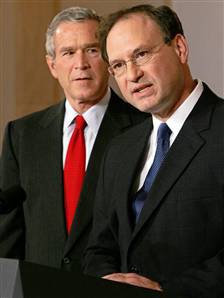

Adrian Rogers is Dead
Who's Adrian Rogers?
Glad you asked.
The Rev. Adrian P. Rogers, the three-time president of the Southern Baptist Convention who led a conservative takeover of the powerful denomination that helped usher in a resurgence of conservative Christians on pulpits and in politics, died on Tuesday in Memphis. He was 74.
His death was announced on the Web site of a ministry he founded, Love Worth Finding, www.lwf.org. He had cancer and pneumonia, according to The Baptist Press News.
Mr. Rogers, who used the honorific Dr. because of his many honorary degrees, was a riveting preacher who helped revive the fundamentalist Christian message that the Bible is to be regarded as literally true.
He took over leadership of the Bellevue Baptist Church in Memphis in 1972 and built it into one of the nation's earliest megachurches, with a new suburban campus in Cordova, Tenn., and a congregation of 29,000. He retired as pastor in March.
His first election as president of the Southern Baptist Convention, in 1979, was the turning point in the conservatives' battle for dominance over theological liberals and moderates - a battle that had been simmering for more than 15 years.
The Southern Baptist Convention is the nation's largest Protestant denomination, with more than 16 million members, and the second largest religious group in the nation, after the Roman Catholic Church.
"After World War II, some of our seminaries and our institutions took a turn to the left, a turn that the rank and file didn't take," said Richard D. Land, president of the Ethics and Religious Liberty Commission, the public policy and lobbying arm of the Southern Baptist Convention.
"Dr. Rogers was part of that first generation of people who went to seminary and heard the Bible attacked in the classroom," Dr. Land said, "and resolved that when they got to a position of authority and influence, they would use it to try to bring the seminaries and institutions back into line with what Baptists have always believed about the Bible."
After Mr. Rogers's election, the conservatives never lost the presidency. He was re-elected president in 1986 and 1987, and he appointed committee members to replace the trustees who ran the denomination's six seminaries, national agencies and ministries.
Under the conservatives' control, the convention reversed course and became an opponent of abortion. It took controversial positions in favor of evangelizing Jews, boycotting the Walt Disney Company because of its gay-friendly policies, and asserting that women were mandated by the Bible to "submit" to their husbands. Mr. Rogers helped revise the Baptist confession of faith in 2000, which said that only men could serve as pastors.
"Rogers was the rhetorician of this movement," said Bill J. Leonard, a church historian who is dean of Wake Forest University Divinity School and author of "Baptists in America" (2005, Columbia University Press).
The takeover of the Southern Baptist Convention has been a model for conservatives in other Protestant denominations who are trying to wrest control of church institutions from their liberal-to-moderate wings, Dr. Leonard said.
Mr. Rogers was particularly involved in overhauling the Southern Baptist seminaries and curriculums, said Dr. Leonard, who was pushed out along with other moderates. He said that from 1990 to 1995, about 80 percent of the faculty members in the six seminaries either were forced out or took early retirement as a result of the conservative takeover.
Mr. Rogers, born in West Palm Beach, Fla., was a high school football star who said he heard his call to the ministry one day while lying face down on the field. He graduated from Stetson University in Deland, Fla., in 1954 and from the New Orleans Baptist Theological Seminary in 1958.
He is survived by his wife, Joyce, of Memphis; two sons, Steve of North Palm Beach, Fla., and David, a missionary in Madrid; two daughters, Gayle Foster, of Snellville, Ga., and Janice Edmiston of Arlington, Tenn.; and nine grandchildren.
In October, Mr. Rogers told The Florida Baptist Witness that out of everything he had accomplished in his life, "I think the part that God allowed me to have in the turning of the Southern Baptist Convention may have the longest-lasting effect and be the most significant."
In the NYT print version, there's a quote from James Dobson, on whose Focus on the Family board Rogers sat:
(Rogers) was "a staunch ally in the battle to defend biblical values in our culture."
Since I run this here blog I get to say what's important about this man and this article on his death. And what I find compelling is the reference by Richard Land that Rogers was among the first seminarians to find the bible "attacked" in the classroom.
I'm not sure how old biblical criticism is--it probably goes back at least to the apostalic era--but I imagine that the post-war era, when the young Rogers would have entered seminary, was a time when bible scholarship (which for fundamentalists is kind of a contradiction in terms) began to be taken more seriously. Certainly the theories of Charles Darwin, and the Scopes trial raised questions about biblical literalness that fundamentalists had long assumed were, um, gospel truth.
Since that time, scholars and theologians have continued to make great strides in uncovering many of the mysteries of how, when and why the books of the bible came to be written.
Richard Friedman, in Who Wrote The Bible, argues that the old testament reflects two strands of historical writing from two branches of the family of Abraham, the people of Israel's patriarch, who were separated when Jacob took his family into Egypt but who came to be reunited after the Israelite exodus experience. His theory supports those scholars who find in the Genesis creation story, seemingly two separate accounts (for more on this, please see Karen Armstrong's In The Beginning). Friedman contends this pattern of parallel bible accounts continues throughout scripture as the two histories of the people were woven together in an effort, after the Babylonian captivity, to create a united people.
Recent scholarship of the new testament has, if anything, been even more revealing. Among the more interesting theories of the origin of the gospel stories of Jesus are that they were written to serve as liturgical readings to supplement the readings of the Jewish Torah that took place in the synagogues (for more on this, please see Liberating the Gospels, by Bishop John Shelby Spong). More specifically, there is evidence to believe that the gospel accounts are ordered, not as strict biography or history, but in a pattern set to correspond to the readings affiliated with the various Jewish festivals. This is a pattern that even some conservative Christian scholars have come to accept, for instance in the book of John, who's text reveals an author seeking to show how Jesus replaced the various symbols and feasts of the Jewish cycle. Furthermore, it now also seems evident that Mark was the first gospel to be written, followed at least decade or more later by the writers of Matthew and Luke, who had Mark at their side as they constructed their accounts, but changed Mark's earlier account for specific purposes.
In any event, all of this is to say that this is some of the background involved in the fundamentalists' dispute with modernity and scholarship within the church itself. These in-depth scriptural studies have not always lent themselves to the demands of evangelism and the reassurance of "faith" required by many members of the church community, who have been taught, and many in the pews who want to believe, that the bible and the preacher shouldn't be questioned, the least of all my uppitty, elitist liberal scholars trying to undermine the gospel.
And this Rogers guy was apparently instrumental in purging the seminaries of this type of scholarship, or at least of those researchers whose findings revealed evidence the church would rather not know, or debate.
The end result is a church leadership that is meaner and more manipulative, and a church body that is more bitter, more narrow-minded, and less able to relate to the practices of an evolving world where reason and serious inquiry interfere with the demands of "faith".
As I've written previously, I think this is obviously a disturbing trend, both for the church and for those outside of it. For those in the church, and supposedly interested in the "truth", it seems worthwhile, even necessary to me, to subject the claims of the bible, or at least the claims of leading fundamentalists to a thorough examination, and to not be afraid to question long-held assumptions, even as the church becomes more defensive and critical of dissidents who aren't as willing any more to blindly follow their leaders.
Glad you asked.
The Rev. Adrian P. Rogers, the three-time president of the Southern Baptist Convention who led a conservative takeover of the powerful denomination that helped usher in a resurgence of conservative Christians on pulpits and in politics, died on Tuesday in Memphis. He was 74.
His death was announced on the Web site of a ministry he founded, Love Worth Finding, www.lwf.org. He had cancer and pneumonia, according to The Baptist Press News.
Mr. Rogers, who used the honorific Dr. because of his many honorary degrees, was a riveting preacher who helped revive the fundamentalist Christian message that the Bible is to be regarded as literally true.
He took over leadership of the Bellevue Baptist Church in Memphis in 1972 and built it into one of the nation's earliest megachurches, with a new suburban campus in Cordova, Tenn., and a congregation of 29,000. He retired as pastor in March.
His first election as president of the Southern Baptist Convention, in 1979, was the turning point in the conservatives' battle for dominance over theological liberals and moderates - a battle that had been simmering for more than 15 years.
The Southern Baptist Convention is the nation's largest Protestant denomination, with more than 16 million members, and the second largest religious group in the nation, after the Roman Catholic Church.
"After World War II, some of our seminaries and our institutions took a turn to the left, a turn that the rank and file didn't take," said Richard D. Land, president of the Ethics and Religious Liberty Commission, the public policy and lobbying arm of the Southern Baptist Convention.
"Dr. Rogers was part of that first generation of people who went to seminary and heard the Bible attacked in the classroom," Dr. Land said, "and resolved that when they got to a position of authority and influence, they would use it to try to bring the seminaries and institutions back into line with what Baptists have always believed about the Bible."
After Mr. Rogers's election, the conservatives never lost the presidency. He was re-elected president in 1986 and 1987, and he appointed committee members to replace the trustees who ran the denomination's six seminaries, national agencies and ministries.
Under the conservatives' control, the convention reversed course and became an opponent of abortion. It took controversial positions in favor of evangelizing Jews, boycotting the Walt Disney Company because of its gay-friendly policies, and asserting that women were mandated by the Bible to "submit" to their husbands. Mr. Rogers helped revise the Baptist confession of faith in 2000, which said that only men could serve as pastors.
"Rogers was the rhetorician of this movement," said Bill J. Leonard, a church historian who is dean of Wake Forest University Divinity School and author of "Baptists in America" (2005, Columbia University Press).
The takeover of the Southern Baptist Convention has been a model for conservatives in other Protestant denominations who are trying to wrest control of church institutions from their liberal-to-moderate wings, Dr. Leonard said.
Mr. Rogers was particularly involved in overhauling the Southern Baptist seminaries and curriculums, said Dr. Leonard, who was pushed out along with other moderates. He said that from 1990 to 1995, about 80 percent of the faculty members in the six seminaries either were forced out or took early retirement as a result of the conservative takeover.
Mr. Rogers, born in West Palm Beach, Fla., was a high school football star who said he heard his call to the ministry one day while lying face down on the field. He graduated from Stetson University in Deland, Fla., in 1954 and from the New Orleans Baptist Theological Seminary in 1958.
He is survived by his wife, Joyce, of Memphis; two sons, Steve of North Palm Beach, Fla., and David, a missionary in Madrid; two daughters, Gayle Foster, of Snellville, Ga., and Janice Edmiston of Arlington, Tenn.; and nine grandchildren.
In October, Mr. Rogers told The Florida Baptist Witness that out of everything he had accomplished in his life, "I think the part that God allowed me to have in the turning of the Southern Baptist Convention may have the longest-lasting effect and be the most significant."
In the NYT print version, there's a quote from James Dobson, on whose Focus on the Family board Rogers sat:
(Rogers) was "a staunch ally in the battle to defend biblical values in our culture."
Since I run this here blog I get to say what's important about this man and this article on his death. And what I find compelling is the reference by Richard Land that Rogers was among the first seminarians to find the bible "attacked" in the classroom.
I'm not sure how old biblical criticism is--it probably goes back at least to the apostalic era--but I imagine that the post-war era, when the young Rogers would have entered seminary, was a time when bible scholarship (which for fundamentalists is kind of a contradiction in terms) began to be taken more seriously. Certainly the theories of Charles Darwin, and the Scopes trial raised questions about biblical literalness that fundamentalists had long assumed were, um, gospel truth.
Since that time, scholars and theologians have continued to make great strides in uncovering many of the mysteries of how, when and why the books of the bible came to be written.
Richard Friedman, in Who Wrote The Bible, argues that the old testament reflects two strands of historical writing from two branches of the family of Abraham, the people of Israel's patriarch, who were separated when Jacob took his family into Egypt but who came to be reunited after the Israelite exodus experience. His theory supports those scholars who find in the Genesis creation story, seemingly two separate accounts (for more on this, please see Karen Armstrong's In The Beginning). Friedman contends this pattern of parallel bible accounts continues throughout scripture as the two histories of the people were woven together in an effort, after the Babylonian captivity, to create a united people.
Recent scholarship of the new testament has, if anything, been even more revealing. Among the more interesting theories of the origin of the gospel stories of Jesus are that they were written to serve as liturgical readings to supplement the readings of the Jewish Torah that took place in the synagogues (for more on this, please see Liberating the Gospels, by Bishop John Shelby Spong). More specifically, there is evidence to believe that the gospel accounts are ordered, not as strict biography or history, but in a pattern set to correspond to the readings affiliated with the various Jewish festivals. This is a pattern that even some conservative Christian scholars have come to accept, for instance in the book of John, who's text reveals an author seeking to show how Jesus replaced the various symbols and feasts of the Jewish cycle. Furthermore, it now also seems evident that Mark was the first gospel to be written, followed at least decade or more later by the writers of Matthew and Luke, who had Mark at their side as they constructed their accounts, but changed Mark's earlier account for specific purposes.
In any event, all of this is to say that this is some of the background involved in the fundamentalists' dispute with modernity and scholarship within the church itself. These in-depth scriptural studies have not always lent themselves to the demands of evangelism and the reassurance of "faith" required by many members of the church community, who have been taught, and many in the pews who want to believe, that the bible and the preacher shouldn't be questioned, the least of all my uppitty, elitist liberal scholars trying to undermine the gospel.
And this Rogers guy was apparently instrumental in purging the seminaries of this type of scholarship, or at least of those researchers whose findings revealed evidence the church would rather not know, or debate.
The end result is a church leadership that is meaner and more manipulative, and a church body that is more bitter, more narrow-minded, and less able to relate to the practices of an evolving world where reason and serious inquiry interfere with the demands of "faith".
As I've written previously, I think this is obviously a disturbing trend, both for the church and for those outside of it. For those in the church, and supposedly interested in the "truth", it seems worthwhile, even necessary to me, to subject the claims of the bible, or at least the claims of leading fundamentalists to a thorough examination, and to not be afraid to question long-held assumptions, even as the church becomes more defensive and critical of dissidents who aren't as willing any more to blindly follow their leaders.
Tuesday, November 15, 2005
"The Inspections Aren't Working"
Remember that line from the pre-Iraq-war days? That was what the administration and its allies pushed on us after they paid lip service to the idea of diplomatically resolving the U.S.'s dispute with Baghdad. The UN WMD inspectors weren't in the country more than a few hours before "the inspections aren't working" became the Republican talking point of the hour.
Thankfully, Matt Yglesias retrieves this important factor in the politics leading to the invasion in March 2003:
That notwithstanding, in order to appease Colin Powell and/or Tony Blair, the administration eventually found itself at the UN, sponsoring resolutions and offering ultimata. Thus, the ready-made preemption/prevention morass got dragged into yet another idea -- coercive diplomacy, where threats of war are intended to produce not war, but compliance with demands.
Unfortunately for Bush, Saddam unexpectedly wound up substantially complying with his demands and inspectors entered the country. It was here that we got the very most egregious dissembling about weapons of mass destruction. Inspectors were on the ground, not finding weapons, debunking certain specific administration claims, and asking the US for the rest of the evidence to substantiate all the big talk.
The hawks chose to portray this situation as proof that inspections "weren't working" because the (obviously incompetent) inspectors were failing to find the WMD facilities that "everyone knew" were there.
The other critical element in this strange debate (I say "strange" in the sense that I don't know why the administration wants to "go here"--they're only digging their grave a little deeper by keeping the pre-war "intelligence" issues alive) is that the war is going badly. If the Mission was in fact Accomplished in May, 2003, we wouldn't be having this discussion. But as Matt says:
There's a lesson or two in here about honesty, but first and foremost it should be a lesson about strategy. The war has not, shall we say, gone swimmingly, which is always a risk when you go to war. Nor did the intelligence -- even the parts of it the administration wasn't spinning, twisting, or otherwise sexing up -- hold up to scrutiny, which is also always a risk in the intel game. The result has been something of a fiasco across the entire spectrum of American power.
"The inspections aren't working." Of the misdirections, deceptions, half-truths, exaggerations, and propoganda we were subjected to in the aftermath of 9-11, the administration's running roughshod over the inspections process--and by extension, the UN and its disarmament team led by Hans Blix, an institution and individual that came to be ridiculed and trashed for their supposingly being duped by Hussein, and for not serving America's interests of the moment, was perhaps the worst of the lot. One can almost defend, by any means necessary, the need to force Iraq to open its operations to weapons inspections, as required by the various UN resolutions worked out in the ending of the first Gulf War. But to sabotage the inspections process itself so America's military machine could launch its Shock and Awe campaign was to assume the same tactics as other infamous nationalist and militant bullies have done, both in the last century, and throughout history.
And now that war has unraveled, the "intelligence" and political failures preceding the war have come into greater scrutiny. Well, better late than never.
If there's any consolation in this for Americans suspicious of its own country's future military ambitions (and some of the most patriotic of America's founders--Jefferson, Madison--worried of the effect of "standing militaries") it is this: the Iraq debacle has made future wars less likely, and the propoganda that fuels them, less believable.
And although the administration is firing on its Democratic critics, it has enough problems fending off opponents that were once its friends--former Colin Powell aide, Lawrence Wilkerson comes to mind--and members of its own party in Congress that want answers.
Update: The Rude Pundit has the "rest of the story" about those Democratic quotes before the war that the President quoted yesterday, here. But in any event, I agree with Josh Marshall that we Democrats shouldn't be embarassed or try to cover up any Democratic collusion in this matter. Let the chips fall where they may, as Josh says.
Let them dig through the transcripts. And if there's collateral damage among today's accusers, so be it. Let the facts get hashed out and the chips fall. There's only one side of this argument running scared from the truth. We know what happened. We were there. We all remember.
Thankfully, Matt Yglesias retrieves this important factor in the politics leading to the invasion in March 2003:
That notwithstanding, in order to appease Colin Powell and/or Tony Blair, the administration eventually found itself at the UN, sponsoring resolutions and offering ultimata. Thus, the ready-made preemption/prevention morass got dragged into yet another idea -- coercive diplomacy, where threats of war are intended to produce not war, but compliance with demands.
Unfortunately for Bush, Saddam unexpectedly wound up substantially complying with his demands and inspectors entered the country. It was here that we got the very most egregious dissembling about weapons of mass destruction. Inspectors were on the ground, not finding weapons, debunking certain specific administration claims, and asking the US for the rest of the evidence to substantiate all the big talk.
The hawks chose to portray this situation as proof that inspections "weren't working" because the (obviously incompetent) inspectors were failing to find the WMD facilities that "everyone knew" were there.
The other critical element in this strange debate (I say "strange" in the sense that I don't know why the administration wants to "go here"--they're only digging their grave a little deeper by keeping the pre-war "intelligence" issues alive) is that the war is going badly. If the Mission was in fact Accomplished in May, 2003, we wouldn't be having this discussion. But as Matt says:
There's a lesson or two in here about honesty, but first and foremost it should be a lesson about strategy. The war has not, shall we say, gone swimmingly, which is always a risk when you go to war. Nor did the intelligence -- even the parts of it the administration wasn't spinning, twisting, or otherwise sexing up -- hold up to scrutiny, which is also always a risk in the intel game. The result has been something of a fiasco across the entire spectrum of American power.
"The inspections aren't working." Of the misdirections, deceptions, half-truths, exaggerations, and propoganda we were subjected to in the aftermath of 9-11, the administration's running roughshod over the inspections process--and by extension, the UN and its disarmament team led by Hans Blix, an institution and individual that came to be ridiculed and trashed for their supposingly being duped by Hussein, and for not serving America's interests of the moment, was perhaps the worst of the lot. One can almost defend, by any means necessary, the need to force Iraq to open its operations to weapons inspections, as required by the various UN resolutions worked out in the ending of the first Gulf War. But to sabotage the inspections process itself so America's military machine could launch its Shock and Awe campaign was to assume the same tactics as other infamous nationalist and militant bullies have done, both in the last century, and throughout history.
And now that war has unraveled, the "intelligence" and political failures preceding the war have come into greater scrutiny. Well, better late than never.
If there's any consolation in this for Americans suspicious of its own country's future military ambitions (and some of the most patriotic of America's founders--Jefferson, Madison--worried of the effect of "standing militaries") it is this: the Iraq debacle has made future wars less likely, and the propoganda that fuels them, less believable.
And although the administration is firing on its Democratic critics, it has enough problems fending off opponents that were once its friends--former Colin Powell aide, Lawrence Wilkerson comes to mind--and members of its own party in Congress that want answers.
Update: The Rude Pundit has the "rest of the story" about those Democratic quotes before the war that the President quoted yesterday, here. But in any event, I agree with Josh Marshall that we Democrats shouldn't be embarassed or try to cover up any Democratic collusion in this matter. Let the chips fall where they may, as Josh says.
Let them dig through the transcripts. And if there's collateral damage among today's accusers, so be it. Let the facts get hashed out and the chips fall. There's only one side of this argument running scared from the truth. We know what happened. We were there. We all remember.
Monday, November 14, 2005
Monday Morning Quarterback
Redskins 35
Tampa Bay 36
Yes, yes, an excruciating, agonizing defeat. But I'm having a hard time being angry at the team or apocalyptic about its season prospects (playoffs!!!?? playoffs!!!?!?!). The killer was their not being able to get a first down when they had the ball at their own 20 with 3:46 left to go. Should they have run three straight times? As hard as it is to say right now with perfect hindsight, I think the answer is yes. They had been running well all day. They needed to run the clock down and avoid a mistake through the air. It was a sane strategy. They just didn't get it done. And their defense now has holes, largely because of injuries. They need Cornelius Griffin and Sean Taylor back, and Carlos Rogers healthy again. Next up: Oakland Raiders.
Vikings 24
Giants 21
Only consolation for Redskins loss was this strange Giants debacle at home against the Vikings, who didn't score a single offensive touchdown, yet sneaked out of New Jersey a winner against a team that hung 36 on us two weeks ago.
Ravens 3
Jaguars 30
I hope Ray Lewis and Ed Reed come back soon. I'm only a fair-weather Ravens fan, but this is getting ugly.
Jets 3
Panthers 30
The Jets aren't getting any respect on the field or in the New York Times sports section. The first two pages are dedicated to the Giants (who, admittedly, are now 6-3 and presumably playoff bound) while the Jets get relegated to the third and fourth pages. But its worse than that. The Giants got at least four different articles to the Jets measly two. Of course, if the Jets would win, that might help their case.
Mike Shanahan 31
Al Davis 17
I don't like it that the Raiders lost at home to the Broncos to drop to 3-6. That might make them a pretty angry team next week for the Redskins, who might be tempted to take them lightly. They shouldn't.
KC 3
Buffalo 14
What happened to KC's offense? I know Priest Holmes was out, but they still have Larry Johnson and Trent Green.
GB 33
Atlanta 25
Another weird game, or at least weird result. But then, if you have Brett Farve on your team, anything's possible.
Rams 16
Seahawks 31
Seahawks are finally making some noise, after the many years of Mike Holgrem's leadership and Matt Hasselback's QBing. Shaun Alexander having a career year. This team could be hard to beat in the playoffs especially if they have home-field.
Patriots 23
Dolphins 16
Won't the Pats just go away already?
Cowboys
Iggles
This should be a very good game.
Tampa Bay 36
Yes, yes, an excruciating, agonizing defeat. But I'm having a hard time being angry at the team or apocalyptic about its season prospects (playoffs!!!?? playoffs!!!?!?!). The killer was their not being able to get a first down when they had the ball at their own 20 with 3:46 left to go. Should they have run three straight times? As hard as it is to say right now with perfect hindsight, I think the answer is yes. They had been running well all day. They needed to run the clock down and avoid a mistake through the air. It was a sane strategy. They just didn't get it done. And their defense now has holes, largely because of injuries. They need Cornelius Griffin and Sean Taylor back, and Carlos Rogers healthy again. Next up: Oakland Raiders.
Vikings 24
Giants 21
Only consolation for Redskins loss was this strange Giants debacle at home against the Vikings, who didn't score a single offensive touchdown, yet sneaked out of New Jersey a winner against a team that hung 36 on us two weeks ago.
Ravens 3
Jaguars 30
I hope Ray Lewis and Ed Reed come back soon. I'm only a fair-weather Ravens fan, but this is getting ugly.
Jets 3
Panthers 30
The Jets aren't getting any respect on the field or in the New York Times sports section. The first two pages are dedicated to the Giants (who, admittedly, are now 6-3 and presumably playoff bound) while the Jets get relegated to the third and fourth pages. But its worse than that. The Giants got at least four different articles to the Jets measly two. Of course, if the Jets would win, that might help their case.
Mike Shanahan 31
Al Davis 17
I don't like it that the Raiders lost at home to the Broncos to drop to 3-6. That might make them a pretty angry team next week for the Redskins, who might be tempted to take them lightly. They shouldn't.
KC 3
Buffalo 14
What happened to KC's offense? I know Priest Holmes was out, but they still have Larry Johnson and Trent Green.
GB 33
Atlanta 25
Another weird game, or at least weird result. But then, if you have Brett Farve on your team, anything's possible.
Rams 16
Seahawks 31
Seahawks are finally making some noise, after the many years of Mike Holgrem's leadership and Matt Hasselback's QBing. Shaun Alexander having a career year. This team could be hard to beat in the playoffs especially if they have home-field.
Patriots 23
Dolphins 16
Won't the Pats just go away already?
Cowboys
Iggles
This should be a very good game.
Subscribe to:
Posts (Atom)